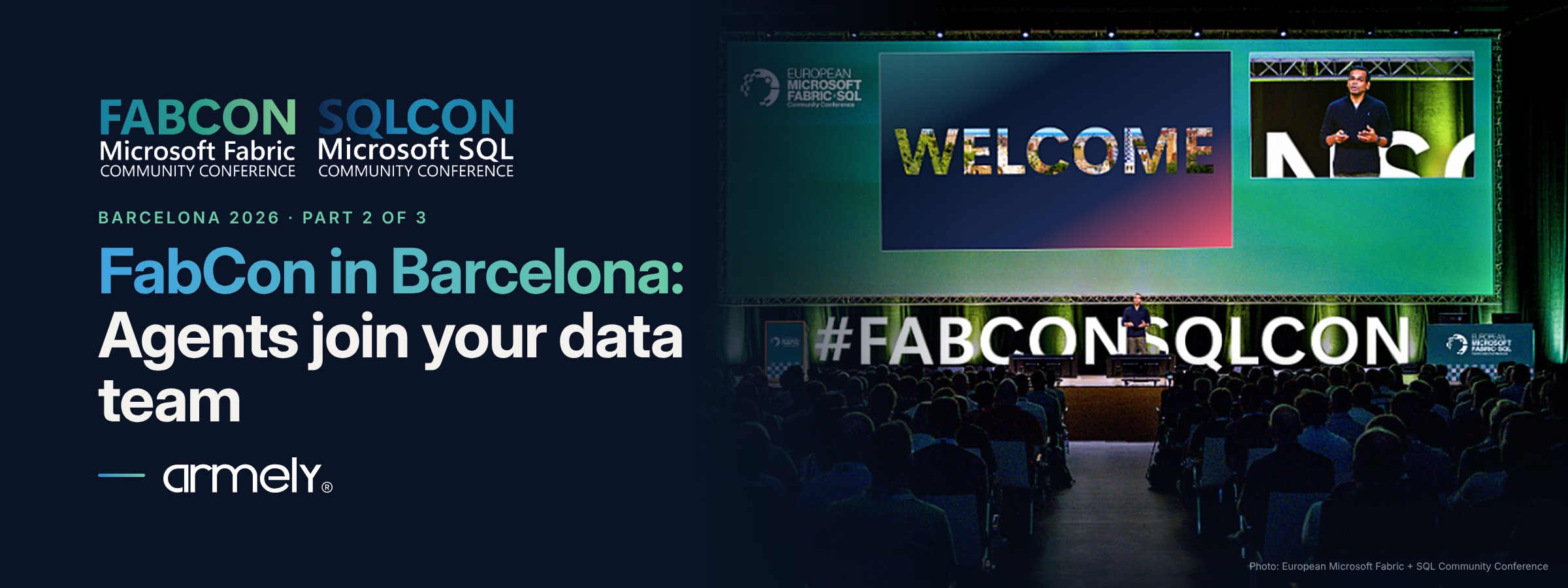

FabCon in Barcelona, Part 2: Agents Join Your Data Team
Part 2 of 3 in our series "What FabCon in Barcelona means for your data platform.
A lakehouse migration used to mean months of hand-built pipelines, a spreadsheet of what broke, and late nights before cutover.
In Barcelona, Microsoft handed that work to an agent. Your engineers set the goal and the guardrails. The agent plans the work, runs it, checks the results, and asks when it needs a decision.
That shift runs through every data announcement from the week. Engineers move from doing each task to directing the system that does it. Microsoft also shipped new tools to watch, deploy, and govern that system.
This part covers what changes for your data engineers, platform admins, and governance team.
The Data Engineering Agent
The Data Engineering Agent is in preview. It builds on technology from Microsoft's January 2026 acquisition of Osmos, so you may also see it called Project Osmos.
You set the outcome and the guardrails. The agent plans the work, runs it on Fabric Spark, validates the results, and adjusts. It targets the jobs that eat weeks:
- Data platform migrations
- Lakehouse modernization
- Performance tuning
- Complex ETL and schema harmonization
- Data preparation
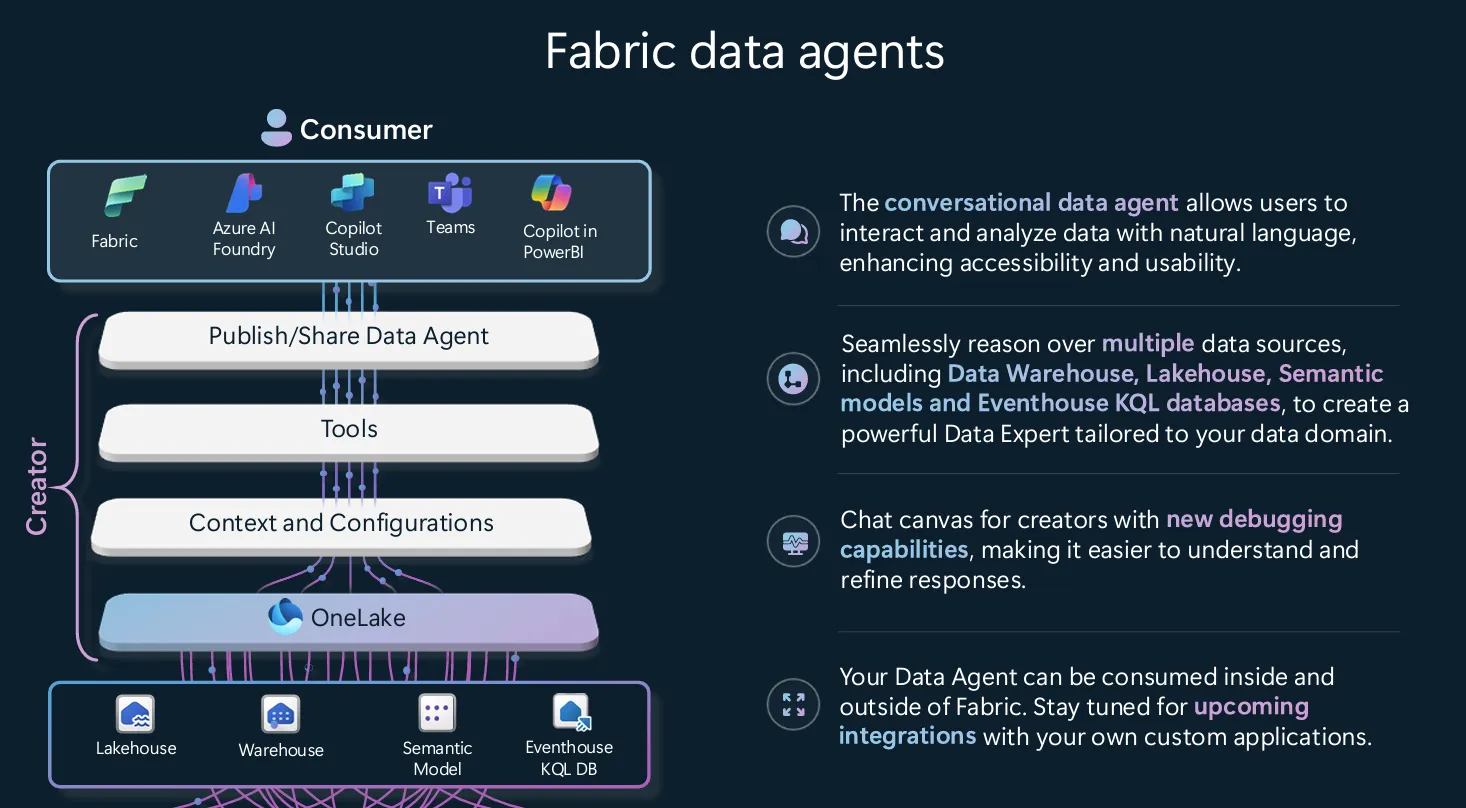
Tasks inherit workspace permissions. Your teammates watch progress, add context, and answer the agent's questions on the same task. You start and steer the work from GitHub Copilot, VS Code, Codex, or Claude Code.
Fabric Data Factory: 45+ new capabilities
The biggest news for many US teams is the upgrade path from Azure Data Factory and Synapse. It runs in three steps:
- View in Fabric. Your existing ADF environment appears in a Fabric workspace. ADF stays the source of truth.
- Assess. A built-in report flags each pipeline as ready, needs review, or blocked on a planned feature. You download it.
- Upgrade. You move supported pipelines in batches. New APIs automate this for larger estates.
Other Data Factory updates:
- Copy job: change data capture, SCD Type 2, and audit columns are all GA
- Mirroring: Google BigQuery and SharePoint List mirroring are GA
- Pipelines: new Actions activities call Fabric platform APIs directly, and agents reason over pipeline runs
What this means for you
If you run ADF or Synapse, start the assessment now. It touches nothing in production and gives you a real migration backlog. Test the Data Engineering Agent on a low-risk migration before you trust it with core pipelines.
Running Fabric like production software
You now watch, deploy, and fix Fabric the way software teams run their apps. Most of these features are in preview.
Observability (preview)
- Workspace monitoring sends telemetry from many workspaces into one shared eventhouse. You set retention and caching, and you send data to your own tools through a custom endpoint and public APIs.
- The refreshed Monitor Hub shows health across jobs, apps, agents, alerts, and capacities in one view.
- Activator job alerts notify you of failures and successes.
- Operations agents investigate failures, build evidence-backed root causes, and suggest next steps. Pipeline failures come first.
Real-Time Intelligence
Copilot now builds Real-Time Dashboards from a plain description. It also handles eventhouse admin work: creating tables, setting policies, managing schema, and checking cluster state.
Git and CI/CD
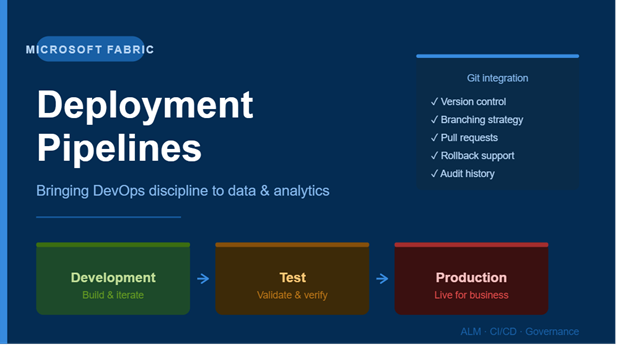
- Deployment plans (preview). You set deployment order on a visual canvas, with YAML as the source of truth. Pre- and post-steps run inside the plan, such as loading a lakehouse with a notebook before dependent items deploy.
- Bulk import and export APIs (GA). You move many item definitions in one call. Imports work out the order and fix references for the target workspace.
- Branch workspace delegation (preview). Developers create branch workspaces on their own. Admins set the role, capacity, and settings each one gets.
- File-level commits and branch switching (preview). You commit only the files that are ready.
- Compare and commit, selective branching (GA).
- API quotas. A unified quota model and higher limits for core APIs support heavier automation.
What this means for you
If your team still deploys Fabric by hand, deployment plans and the bulk APIs remove most of the excuses. Start with one workspace and one plan, then copy the pattern.
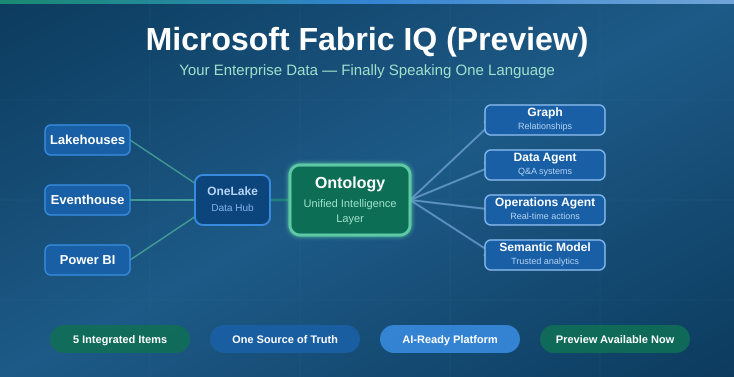
OneLake shares context, not only data
OneLake now shares business context with partners and customers, and it reaches more of your sources without copies.
IQ Sharing
IQ Sharing lets you share governed data and business context across teams, customers, and partners. At launch it covers governed tables and files, Markdown agent instructions, and RDF ontologies. Support for Fabric IQ ontologies and Power BI semantic models is on the roadmap.
EY, S&P Global, TomTom, Financial Fabric, and xMentium are building integrations. TomTom, for example, publishes geospatial and traffic data products you find in the OneLake catalog.
Check the status first. One Microsoft post calls IQ Sharing "now in preview." Another says preview comes soon.
More sources, fewer copies
- Salesforce Data Cloud 360: bidirectional integration, in preview
- Google BigQuery mirroring: GA
- Dynamics 365 Business Central: mirroring coming soon
- Atlan, dbt, and ClickHouse: new partners for context, transformation, and external query engines
Find data where you work
The OneLake catalog now shows individual tables and columns with descriptions and a data preview (GA). It also reaches your team's daily tools:
- Excel (preview). Analysts browse Fabric data in a workbook with row-level, column-level, and Purview label protections intact. No exports.
- Microsoft Foundry (preview). AI developers add trusted OneLake data to agents and knowledge sources.
- GitHub Copilot CLI (GA). Engineers find Fabric tables from the terminal before they write code.
Governance follows your data into Copilot
Sensitivity labels, DLP policies, and information protection controls now apply inside Copilot experiences. You control AI access at two levels:
- Admins use Restrict from Copilot to choose which semantic models take part in AI experiences.
- Model owners use a per-model setting to decide whether read-only users reach the model through Copilot, data agents, and MCP servers.
That per-model setting is on by default. AI access continues until an editor turns it off.
More governance updates:
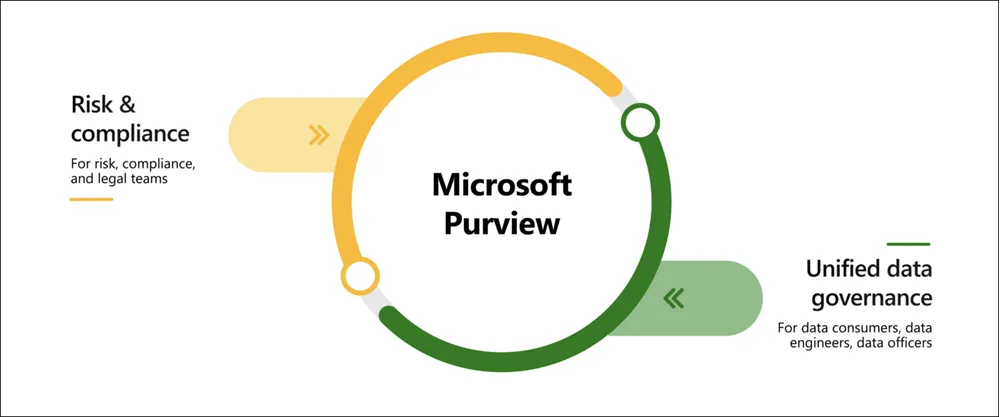
- DLP restrict access (GA). Purview DLP blocks access to Fabric items when it detects sensitive data.
- Policies in Fabric (preview). Attribute-based controls for item creation and workspace security, with external sharing coming soon.
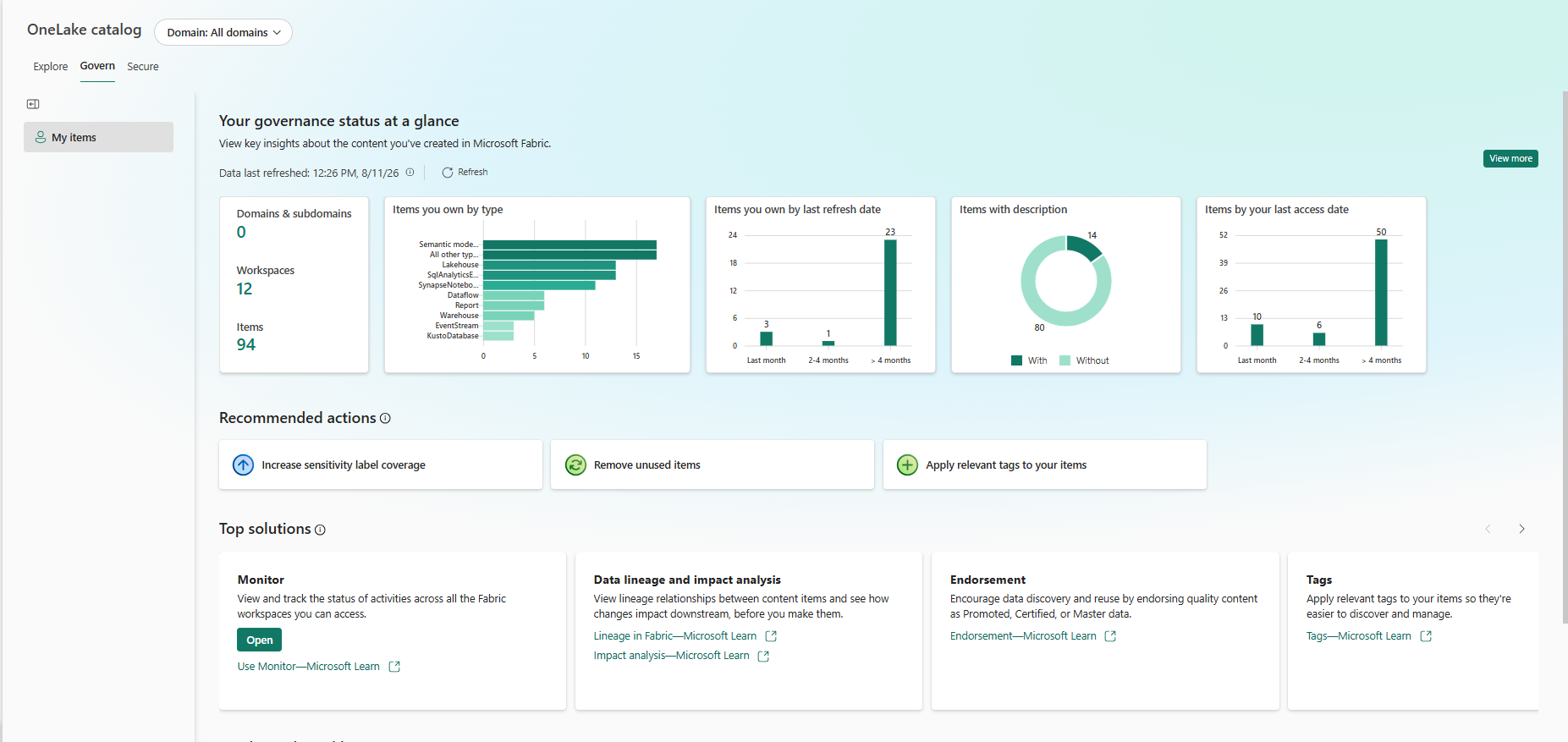
- OneLake catalog Govern experience (GA). One place to manage tenants, domains, capacities, workspaces, tags, and policies.
- Govern Skills. AI guidance that flags governance risks and suggests fixes.
- Outbound access protection for OneLake shortcuts (GA).
- FQDN allowlist for Spark (coming weeks). You approve domains instead of building a private endpoint for every service Spark calls.
- Fabric in GCC High. Fabric now supports DoD Impact Level 4, CJIS, DFARS, and NIST 800-171, which opens it to US defense contractors and state justice agencies.
What this means for you
Audit your semantic models before your users find them in Copilot. A model with salary or customer data and the default setting left on is now reachable through chat. Decide which models stay out of AI, and set it at both levels.
What to do next
- Run the ADF and Synapse assessment. It changes nothing in production and gives you a real migration backlog.
- Pilot the agent on one bounded job. Pick a small migration and measure the hours it saves before you scale.
- Move one workspace to deployment plans. Prove the pattern, then copy it.
- Set AI access on every semantic model. Use both the admin control and the per-model setting.
Up next: the bill and the databases
Agents, monitoring, and governance all run on compute, and compute shows up on your invoice.
In Part 3, we look at the new F0 SKU that needs no upfront capacity, on-demand billing, the capacity overage default you should check today, and the SQLCon news that puts every database you run in one place.
Continue to Part 3: FabCon in Barcelona, Part 3: Pay for What You Use, Manage Every Database | Armely Blog
Book a free Azure Data Factory to Fabric migration assessment at armely.com, by emailing info@armely.com, or by calling 972-460-0643.
Read More
- FabCon and SQLCon 2026 in Barcelona: Building the data foundation for Microsoft Copilot and agents (Arun Ulag, Microsoft Azure Blog)
- Build, deploy, and govern Microsoft Fabric at scale (Kim Manis, Fabric Updates Blog)
- FabCon/SQLCon Barcelona 2026: What's new in Fabric Data Factory (Fabric Updates Blog)
- Bringing governed analytics into the flow of work: Fabric Analytics at FabCon Europe 2026 (Bogdan Crivat, Fabric Updates Blog)
- FabCon Europe 2026: The Announcements That Matter (Solv Systems)